

Venue listings can point to possible locations, but operating hours, gaming access and payout claims require careful interpretation.
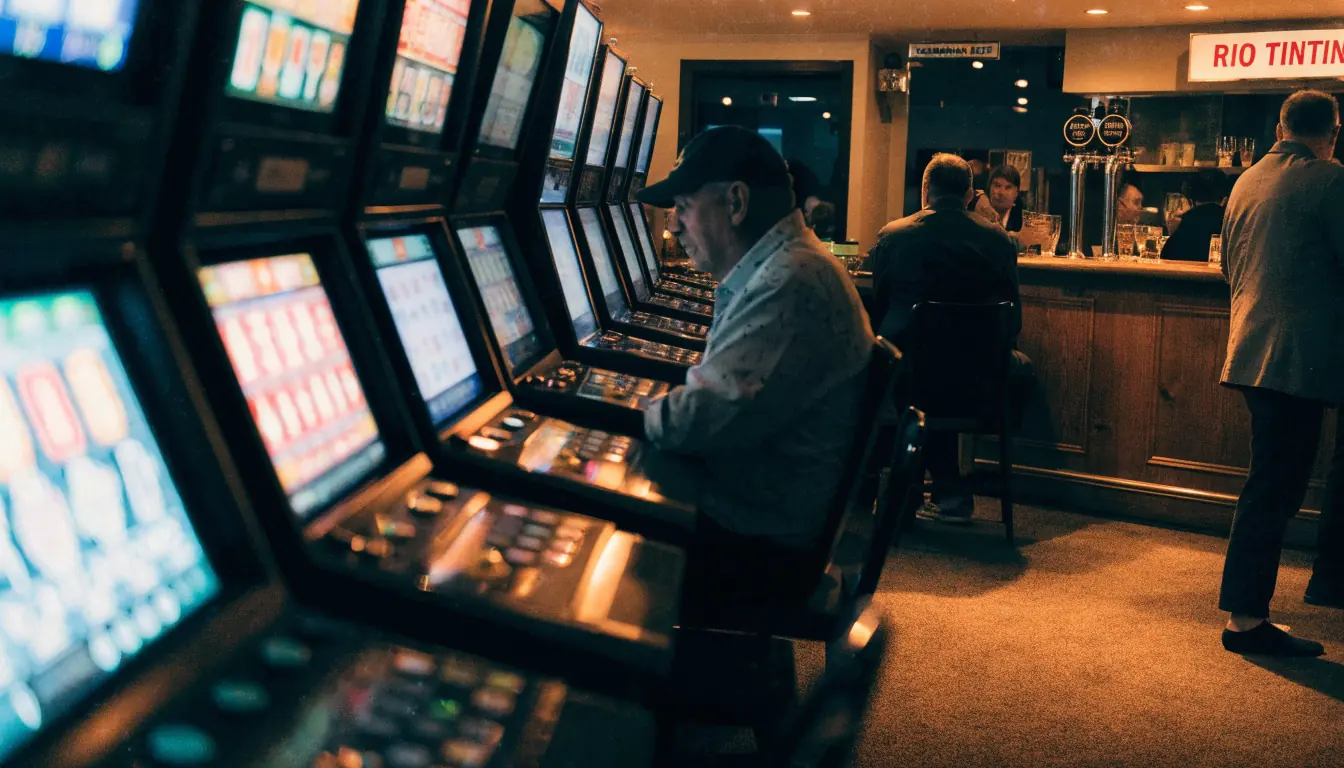
What “Open Now” Can—and Cannot—Tell You
A listing marked “open now” is a time-sensitive claim, not a guarantee that a particular pokies venue in Tasmania is accessible at the moment it is viewed. The label may reflect information supplied earlier by a venue or a directory, and it may not change promptly when circumstances do. It therefore cannot, by itself, establish that the venue is currently admitting patrons or that its gaming area is operating.
This distinction matters because “open” can refer to different things. A premises might be open for one purpose while its gaming facilities are unavailable, or a venue’s public-facing listing might not describe a temporary change. Without current confirmation from the venue, a digital status should be treated as an indication rather than proof. Search results can help identify places that may be relevant, but they do not amount to a live operational record.
The same caution applies to searches framed around early or late access. A result displayed for a particular time may not establish that a venue’s doors or pokies are available then. Nor does a general listing resolve whether access conditions have changed. Opening hours and machine-operating times are related but distinct questions; a single “open” label may not answer both. Where timing is material, direct confirmation from the venue is more informative than relying on a status badge alone.
Operators offering no-deposit bonuses
Choosing pokies to play in Tasmania in 2026 means checking the details that matter to you, such as licensing information and available payment options. This list offers a concise starting point for reviewing the operators.
-
Neospin
- License
- Curacao Gaming Control Board OGL/2023/176/0095 (Hollycorn N.V.)
Neospin lists a Curaçao Gaming Control Board licence, OGL/2023/176/0095, held by Hollycorn N.V.
-
JeetCity Casino
- License
- Curacao eGaming (Dama N.V.)
JeetCity Casino is associated with Dama N.V. and lists a Curaçao eGaming licence.
-
JustCasino
- License
- Curacao Gaming Control Board
JustCasino lists a Curaçao Gaming Control Board licence.
-
Roby Casino
- License
- Curacao eGaming (Roby Games Ltd)
Roby Casino is associated with Roby Games Ltd and lists a Curaçao eGaming licence.
-
House of Pokies
- License
- international iGaming licence – jurisdiction not named in the source
- Payout speed
- PayID 1-24 hours
- Min. deposit
- A$30 (PayID from A$10)
House of Pokies lists an international iGaming licence, though the jurisdiction is not named in the available information. PayID payouts are listed at 1–24 hours, and the minimum deposit is A$30, or A$10 via PayID.
-
Golden Pokies
- License
- Curacao
Golden Pokies lists a Curaçao licence.
-
GoldenCrown
- License
- Curacao Gaming Control Board OGL/2023/176/0095 (Hollycorn N.V.)
GoldenCrown lists a Curaçao Gaming Control Board licence, OGL/2023/176/0095, held by Hollycorn N.V.
-
Ricky Casino
- Payout speed
- crypto under 1 hour, PayID 1-3 business days
- Min. deposit
- A$20 (A$30 to qualify for the bonus)
Ricky Casino lists crypto payouts under 1 hour and PayID payouts in 1–3 business days. The minimum deposit is A$20, with A$30 required to qualify for the bonus.
-
7Bit Casino
- License
- Curacao, operated by Dama N.V.
7Bit Casino is operated by Dama N.V. and lists a Curaçao licence.
-
Thor Casino
- License
- Curacao – Antillephone N.V. (Versus Odds B.V.)
- Min. deposit
- EUR 20
Thor Casino lists a Curaçao licence from Antillephone N.V. (Versus Odds B.V.). Its minimum deposit is EUR 20.
A venue’s name appearing in results also does not establish that it offers pokies. Search systems may group places according to broad categories, older descriptions or information submitted by third parties. A name associated with Tasmania is not evidence of a current gaming-machine offering, and a result’s prominence says nothing about whether the venue is open. These are separate points to verify rather than conclusions that can be drawn from one listing.
“Open now” is especially limited when a result does not explain when its information was checked or who supplied it. Even a recently refreshed page may report a regular schedule rather than an unexpected closure or change in access. A map pin can locate a business without confirming its services; a venue page can describe services without confirming current availability. Combining these signals may make an answer appear more certain than the underlying information warrants.
For Tasmania, an “open now” result should therefore be read narrowly: it indicates that a source represents a venue as open at the time associated with the listing. It does not independently verify the source’s accuracy, the availability of pokies, or access to the gaming area. A clear venue notice or direct confirmation can reduce uncertainty, but the status displayed by a third-party service should not be mistaken for confirmation from the premises.

There is also a separate question of whether gambling activity is being approached with limits. Deposit limits can restrict how much money is put into gambling; loss limits can constrain losses; session-time limits can place boundaries on time spent; and self-exclusion can prevent access to gambling for a chosen period or arrangement. These are standard responsible-gambling tools. Their purpose is not to establish whether a venue is open, but to help structure or restrict participation.
The tools address different dimensions of gambling activity. A deposit limit concerns funds added, while a loss limit concerns the financial outcome of play. A session-time limit concerns duration, and self-exclusion is a stronger access restriction rather than a reminder to stop. The distinctions matter: setting one kind of limit does not necessarily impose the others. None can verify venue hours or confirm that machines are operating.
An “open now” label can consequently serve as a starting point for checking availability, not as a definitive account of it. The information is most useful when its source and timing are clear and when it is confirmed against the venue’s own current information. Without that confirmation, the status remains a provisional description, while responsible-gambling tools remain a separate means of setting boundaries around participation.
Pokies, Payout Claims and What the Evidence Supports
Claims that one pokie pays better than another need to be separated from evidence about a game’s published return setting. Return to player, or RTP, describes a game’s designed return over extensive play, not a promise about what a particular session will produce. It does not establish that a player will receive that proportion back over a short run of spins.
- Return to Player (RTP)
-
A game's designed return over extensive play, which describes a theoretical proportion rather than a guarantee of what a particular session will produce.
A specialist review has reported that some providers let casinos choose among different RTP configurations for the same pokie. If that account applies to a particular game, its return setting may therefore differ between casinos. A game title alone would not establish which setting is in use at a particular venue. Nor does a general RTP figure, without information tied to the casino and configuration, support a comparison of where that game is likely to pay more.
This distinction matters when assessing claims about the best-paying pokies in Tasmania. A ranking can sound precise while leaving out the information needed to verify it: the setting being compared, the casino where it applies and the basis for the comparison. Without those details, a claim that a game has a higher return is not enough to establish that it is the better choice at a Tasmanian venue. The same caution applies to claims about pokies in a CBD or elsewhere in the state. A location attached to a game name does not, by itself, substantiate a payout advantage.
RTP also needs careful interpretation because it is not a forecast for an individual. Each spin is generated through a random-number process, and its outcome does not depend on the result of the previous spin. A recent sequence of losses does not demonstrate that a win is due, just as a recent win does not show that another is more likely to follow. Historical results from a short period cannot establish what the next spin will produce.

Consequently, claims based on anecdotes or selected winning sessions are weak evidence of a game’s comparative return. They may describe what happened to particular players, but they do not establish the underlying setting or show that the same outcome should be expected elsewhere. A large win, or a run of smaller wins, is not proof that a game pays more consistently than another.
The wording of payout claims can obscure these limits. “Pays well” may refer to a player’s experience, a game’s advertised features or an RTP setting; those are different kinds of statements. A comparison is more informative when it identifies exactly what is being compared and specifies the casino-specific setting rather than presenting the game name as sufficient evidence. If a claim does not disclose that basis, its strength cannot be judged from the wording alone.
For people comparing casino pokies in Tasmania, the relevant distinction is between a verifiable setting and a prediction. A published RTP setting, where it can be tied to the specific game configuration, describes a design measure; it does not guarantee a particular return. Conversely, the absence of a clear setting in a claim does not establish that a game has a low return. It means the claim does not provide enough information to support a confident comparison.
This leaves a narrow but useful conclusion about “best” rankings: they should not be treated as evidence of future wins. A game’s name, popularity or previous results cannot show that its next spin is more likely to pay. Any sound assessment of a payout claim must distinguish the casino-specific RTP configuration from individual outcomes, and avoid turning a long-run measure into a promise about short-term play.
Do
- Identify the casino-specific RTP configuration
- Verify the basis for payout comparisons
- Distinguish design measures from predictions
Don't
- Rely on anecdotes or winning sessions
- Treat RTP as a short-term forecast
- Use game titles as sole evidence of payouts
Finding Venues Near Airports and Other Tasmanian Destinations
A location-based search for pokies in Tasmania can refer to several different things: a venue close to an airport, somewhere in a city centre, or a place within a broader region such as northern Tasmania. These are distinct location claims. Naming a destination does not establish that a particular venue is nearby, nor does it provide a reliable measure of the distance.
Airport proximity is especially sensitive to the point being measured. A venue described as “near the airport” might be close in straight-line distance but less convenient by road, or it might lie outside the airport precinct altogether. Without a confirmed venue address and a stated method for measuring distance, a proximity label is not enough to establish how long a trip would take. The same caution applies to descriptions such as “near the CBD”, where the boundary of the central business district may not be clear.

Tasmania is not a single point on a map. A reference to the state, or to “near Tasmania”, is too broad to identify a useful local area. Searches that specify an airport, a CBD or northern Tasmania express a more precise geographic intention, but the wording alone cannot verify a venue’s location. Even an apparently local result needs to be distinguished from a result that merely mentions the destination or appears because of the searcher’s location settings.
“Near me” is also dependent on context. It can reflect a device’s approximate position, a location entered into a search service, or a broad regional setting. Those mechanisms may return results in a nearby town or district rather than within walking distance. A result’s position on a map, its address and the route shown should therefore be treated as separate pieces of information, not interchangeable proof of proximity. No particular Tasmanian venue or airport-to-venue distance can be established from these location labels alone.
For travel planning, the useful distinction is between a named place and a confirmed address. An address allows a route to be assessed against the relevant airport, city centre or regional destination; a general description does not. Road access, transport availability and the route chosen can also affect the practical meaning of “near”, so distance language should not be read as a guarantee of a short journey.

The same restraint applies to searches combining Tasmania with Victoria. The phrase may reflect uncertainty about state boundaries or travel between the two states, rather than a clearly identified Tasmanian location. It does not establish that a venue is in Tasmania, close to a Victorian destination, or accessible from either without further location detail.
These distinctions matter because a place name can make an unsupported proximity claim sound specific. A credible location description needs to identify the venue and the point of comparison clearly enough for the distance to be checked. In Australia, gambling is restricted to adults aged 18 and over; that age rule does not, however, establish where a venue is or how close it is to a destination.
Venue Reporting and Responsible-Gambling Requirements
A venue’s number of pokies can affect the staff and reporting arrangements expected of it, but those requirements should not be treated as a guide to which venue is “best”. They concern oversight and responses to potential gambling harm, not game quality, payouts or the experience offered at a particular club. Nor does a general report establish that any specific Tasmanian venue meets a threshold or complies with an obligation.
A report published by regionriverina.com.au describes a requirement applying from 1 July: venues with more than 20 gaming machines are to have a dedicated responsible gambling officer (RGO) on duty while those machines are operating. The report also describes a one-month grace period for venues to remove signage and introduce RGOs. These details should be understood as reported regulatory information, not as confirmation of the rules currently applying to every Tasmanian venue. The report’s stated requirement alone does not identify its jurisdiction or show how it applies to a particular venue in Tasmania.

The RGO’s relevance is practical: the role provides a designated staff presence for responsible-gambling matters while machines are in operation. The requirement described in the report is conditional on both the machine threshold and operating time. A venue’s apparent size, promotional material or online listing cannot establish whether it crosses that threshold, whether an RGO is on duty, or whether the reported arrangements are in force there. Those are venue-level questions requiring information specific to the premises and the applicable rules.
The same report says venues will be required to maintain a gambling incident register. The register is intended to document occurrences, including situations in which a patron’s behaviour indicates possible exposure to, or experience of, gambling harm. This makes incident recording part of the oversight picture, rather than a measure of how many machines a venue has or what games it offers. The existence of such a requirement does not reveal whether a particular venue has made an entry, how staff assess an incident, or what response followed.
For comparisons among Tasmanian pokies venues, these obligations therefore provide context rather than a ranking method. A claim that a club has responsible-gambling procedures is not, on its own, evidence that the procedures meet a particular standard. Likewise, the reported threshold cannot be used to infer that a smaller venue has no relevant responsibilities, or that a larger one is necessarily compliant. No venue-specific conclusion follows from a general account of reporting rules.
The distinction matters because venue descriptions often combine concrete features with broad assurances. Machine counts, staff roles and incident-recording arrangements are separate matters, and each requires evidence at the level of the venue. Without that evidence, neither an assertion of compliance nor a comparison between clubs is substantiated. Regulatory context can clarify what responsible oversight may involve; it cannot establish which Tasmanian venue performs it well.
Online Searches, the Spirit of Tasmania and Unverified Claims
References to pokies aboard the Spirit of Tasmania should be treated as claims requiring confirmation, not as proof that gaming machines are available during a crossing. A vessel’s name or route does not establish what services it offers. Any assertion about onboard pokies would need support from reliable, current information about the ship’s facilities; without that, the offering cannot be confirmed.
Legal Risk
There are no Australian-licensed online casinos, and using offshore sites means players have no legal recourse in Australia to recover winnings if a provider refuses to pay.
The same caution applies to references to a “Crown” casino in Tasmania. A name appearing in a listing, post or advertisement does not establish that a casino operates in the state, or that a particular venue has pokies. Similar names can be mistaken for a location or business connection. Claims about a Tasmanian casino should therefore be checked against authoritative information about the venue itself rather than inferred from the wording of a search result.
Online offers require a separate distinction. A promotion described as a no-deposit bonus does not establish that the service is lawful in Australia, that a Tasmanian business is behind it, or that the offer can be used on the terms suggested. Promotional wording is not evidence of local authorisation. There is no Australian-licensed online casino, and no domestic licences have been issued for real-money online pokies.
Under the Interactive Gambling Act 2001, companies cannot lawfully provide real-money online pokies to people in Australia without a domestic licence. The absence of such licences means that a site presenting itself as an Australian online casino should not be taken as locally licensed on the basis of its branding, currency or promotion. This legal position concerns the provision of the service; it does not turn a search result or bonus claim into reliable evidence about an operator.
There is also a practical consequence for claims about offshore casinos. If one refuses to pay winnings, an Australian player has no legal recourse in Australia to recover them. That risk is distinct from whether a site advertises a welcome offer or accepts registrations. A headline promising free play or real-money access does not resolve the question of legal protection.
These distinctions help separate three different propositions: that pokies are available on a ferry, that a named casino operates in Tasmania, and that an online offer is available lawfully to Australian residents. Each needs its own evidence. A search listing or promotional page, by itself, confirms none of them. The term “best pokies in Tasmania” may describe an information search, but it should not be read as proof that a particular onboard, land-based or online service exists or is authorised.

Opening Hours and Machine-Operating Times
Venue opening hours and the hours when pokies are operating are related, but they are not interchangeable. A venue may be accessible for other purposes while its machines are not in operation; conversely, a schedule listing gaming hours does not establish that the venue is open at a particular moment. Any claim that a Tasmanian venue operates pokies around the clock therefore needs to be read as a specific statement about both the venue and its machines, not inferred from a general description of the business.
The distinction matters when comparing stated opening hours with machine-operating times. A venue’s timetable may describe its broader operations, while the period in which pokies can be used is a separate matter. Search results or directory entries can also present scheduled hours without confirming a live status. The wording “open” alone does not resolve which of these situations applies.
A report published by regionriverina.com.au describes a responsible-gambling staffing requirement that is tied to machine operation: from 1 July, venues operating more than 20 gaming machines are to have a dedicated responsible gambling officer (RGO) on duty during the machines’ operating hours. The condition concerns the period when machines are running, rather than every hour a venue may be open. It is therefore relevant to interpreting claims about extended machine hours, but it does not establish the schedule of any particular Tasmanian venue.
The RGO requirement also illustrates why a venue’s advertised closing time cannot, by itself, answer every question about pokies availability. Machine operation has its own operational context, and the staffing condition described in the report applies while the machines are in use. It does not provide a timetable, confirm continuous operation, or demonstrate that a venue meets a particular opening-hours claim.
For anyone assessing a statement about 24-hour pokies in Tasmania, the useful distinction is between a venue’s general trading hours, its machine-operating hours, and its status at the time in question. Those are separate claims and should not be treated as equivalents. A schedule is most informative when it identifies which hours it describes and when it was issued; a current-status label is not a substitute for that detail.

This careful reading avoids turning a broad venue listing into a claim about continuous access to pokies. The RGO condition supplies a limited, specific point about staffing during machine operation. It should not be expanded into an assumption about when Tasmanian venues open, when their machines run, or whether a particular location is operating now.
How Randomness Limits Claims About Individual Pokies
A game’s past results cannot establish what its next spin will do. In a pokie, a Random Number Generator determines each outcome separately, so a previous win or run of losses does not make a particular result more or less likely on the next spin. A sequence that appears to show a pattern is not evidence that the machine is due to pay.
This matters when comparing games described as the best pokies in Tasmania. A title’s reputation, a player’s account of a large win, or a record of recent results cannot demonstrate that the same game will produce better outcomes in another session. Those observations describe particular experiences; they do not predict independent random outcomes. Without evidence about the game’s actual configuration, claims that one individual pokie is more likely to pay are not substantiated by its name or apparent history.
There is also a distinction between a game title and the version configured for a particular casino. A specialist review has reported that some providers make multiple return-to-player (RTP) settings available for one game, allowing the same title to have different theoretical return percentages in different casino environments. That report does not establish which setting applies to any specific Tasmanian venue or machine. A title alone therefore cannot confirm its RTP, and a value stated for one setting should not automatically be attributed to every version.
RTP is a long-run theoretical measure, not a forecast for an individual session. Even where a setting is identified, it cannot determine whether a particular spin will win, the size of any result, or how outcomes will unfold over a short period. It also does not support a ranking of individual pokies unless the relevant configuration and comparable evidence are established.
Random Number Generator
In a pokie, a Random Number Generator determines each outcome separately, meaning previous results do not influence or predict the next spin.
Searches about maximum bets or the largest cash payout raise a separate evidential issue. A headline payout figure, where one is reported, would not show how often that outcome occurs or whether it is available under the configuration at a particular venue. Nor does a higher possible prize establish a better chance of winning. These claims require details about the specific game version and the conditions attached to its operation; they cannot be inferred from the game’s title.
Accordingly, comparisons of pokies in Tasmania should distinguish documented configuration from anecdote and prediction. Randomness limits what recent results can show, while variable RTP settings limit what a game name alone can establish. Neither a streak nor a general description of a title is sufficient evidence that one pokie will pay better than another in a future session.
Online Pokies Searches and Australia’s Regulatory Boundaries
Interest in online pokies associated with Tasmania sits within a national legal framework, not a separate state-level permission for internet casinos. Under the Interactive Gambling Act 2001, companies may not provide real-money online casino games to people located in Australia without a domestic licence, and no Australian online casino licence has been issued. The restriction applies to operators’ conduct.
That distinction matters when assessing the legal position of individual players. The law targets the businesses offering the service; it does not make an Australian player liable simply for playing on an offshore site that accepts Australian customers. This does not make such a site locally licensed or provide the protections associated with an Australian-licensed online casino. There is no Australian-licensed online casino.
The Australian Communications and Media Authority (ACMA) is the domestic regulator responsible for enforcing the Interactive Gambling Act. Its role includes restricting access to illegal offshore gambling sites. Internet service providers must act on ACMA’s blocklist, so a site may be inaccessible through a provider’s service after it has been listed. A result describing an online casino as available in Tasmania therefore does not establish that it is authorised to serve people in Australia, nor that access will be uninterrupted.

Phrases such as “online pokies near Tasmania” can also blur two different ideas: a physical venue nearby and an internet service reachable from a device. Location wording in a search result is not evidence of a Tasmanian premises, local licensing, or a legal basis for an offshore operator to provide real-money games to Australians. Likewise, descriptions of high-limit play or games said to pay well do not alter the legal status of the service. Claims about returns are a separate question from whether an operator may lawfully offer online casino games in Australia.
The practical boundary is therefore clearer than the terminology used in online listings. Australian law places the relevant prohibition on providers of real-money online casino services, while ACMA’s enforcement includes site blocking through internet providers. A player’s lack of liability under that operator-focused rule should not be confused with approval, local oversight, or a guarantee that an offshore service will remain reachable. Nor does the appearance of a site in search results establish that it is lawful for the operator to serve Australian residents.
CBD Clubs and the Limits of Venue-Level Information
A search for pokies in Tasmania’s central business districts can bring together several different questions: whether a particular club has gaming machines, how its machines operate, and what support may be available if gambling becomes harmful. These are separate matters. A general statement about venue obligations cannot confirm that a named club offers pokies, nor does it support a ranking of clubs or games.

One report published by regionriverina.com.au describes a requirement for venues to keep a gambling incident register. The register is intended to record occurrences, including situations in which a patron’s behaviour indicates possible gambling harm. This is a record-keeping measure, not a directory of venues. Its existence would not, by itself, show which clubs have machines, how many are on site, or whether a particular incident has occurred at a particular venue.
That distinction matters when assessing claims about clubs in Hobart or other Tasmanian CBDs. Information about a general reporting requirement should not be treated as proof that every club is subject to the same condition, or that a named venue complies with it. Nor does a register establish that patrons have received assistance or that harm has been prevented. Those conclusions would require venue-specific evidence.
The register also has a limited relationship to self-exclusion. It concerns the recording of specified incidents, whereas self-exclusion is a separate responsible-gambling tool. Mention of one does not establish how another is offered or administered at an individual club. A club’s name, location or description as a venue is not enough to verify its machine offering or its practices.

Accordingly, claims about “the best” CBD pokies cannot be substantiated merely by citing a general incident-reporting measure. The measure may indicate the kind of information a venue is expected to record under the reported requirement; it does not measure game quality, payout performance or the availability of particular machines. Without reliable venue-level documentation, conclusions about individual clubs should remain limited to what that documentation actually establishes.
Cashless Queries and PayID: Different Payment Contexts
Cashless pokies and PayID describe different things. “Cashless” concerns how a gaming machine or venue handles payments; PayID is a way to address a bank transfer. The presence of one does not establish the presence of the other. Nor does a reference to PayID show that a venue’s machines accept it, or that a particular venue in Tasmania or Newcastle has a cashless setup.
PayID works through Australia’s New Payments Platform (NPP). Instead of entering bank account details, a sender can use an alias linked to an account, such as an email address, mobile number or Australian Business Number. The NPP is supported by all major banks, and its transfers use end-to-end encryption. These are features of the payment infrastructure, not descriptions of pokies or venue equipment.
That distinction matters when interpreting claims about cashless play. A payment method used to transfer money between bank accounts does not, by itself, reveal whether a gaming machine accepts cash, cards, another form of payment or a cashless system. Establishing a venue’s arrangements would require information specifically about that venue and its machines. A general explanation of PayID cannot supply it.
PayID also says nothing about whether an operator is licensed, whether a game is fair, or what return-to-player setting applies. Those are separate questions, and a payment rail cannot answer them. The NPP’s security features concern the transfer infrastructure; they are not a certification of a gambling service or its games.
Accordingly, a reference to cashless pokies in Tasmania should not be treated as evidence that PayID is available at a particular venue. The two terms belong to separate parts of the payment process: one concerns machine or venue arrangements, while the other identifies a bank transfer destination. Without venue-specific information, claims connecting them remain unsubstantiated.
What does “wagering requirement” actually mean?
It is the amount you must bet before bonus winnings can be withdrawn, usually expressed as a multiplier. For example, a $500 bonus with a 40x requirement means $20,000 in bets before you can withdraw winnings.
What is the legal age for online gambling in Australia?
You must be at least 18 to gamble online in Australia.
Do PayID deposits qualify for bonuses?
Yes. PayID is treated like any other qualifying deposit method at the recommended sites.
How do I know if an online casino is safe to play at?
There is no Australian-licensed online casino, and Australian players have no legal recourse in Australia if an offshore casino refuses to pay winnings. ACMA blocks access to illegal offshore gambling sites, but that does not guarantee an offshore operator is safe.
What is the cost-benefit calculation of casino promotions?
Compare the bonus with the total betting required to meet its wagering condition. For example, a $500 bonus at 40x requires $20,000 in bets; a 35x requirement on a $500 deposit plus a $500 bonus requires $35,000 in bets.